How Much Organic Matter Should Actually Be in Your Rootzone Blend?
Short answer: more than the industry trend suggests. A lot of modern blend thinking has quietly drifted toward treating organic matter as optional — a nice-to-have, not a foundational component — while leaning harder on isolated synthetic inputs to patch whatever that absence causes later. That's backwards, and it's worth saying plainly.
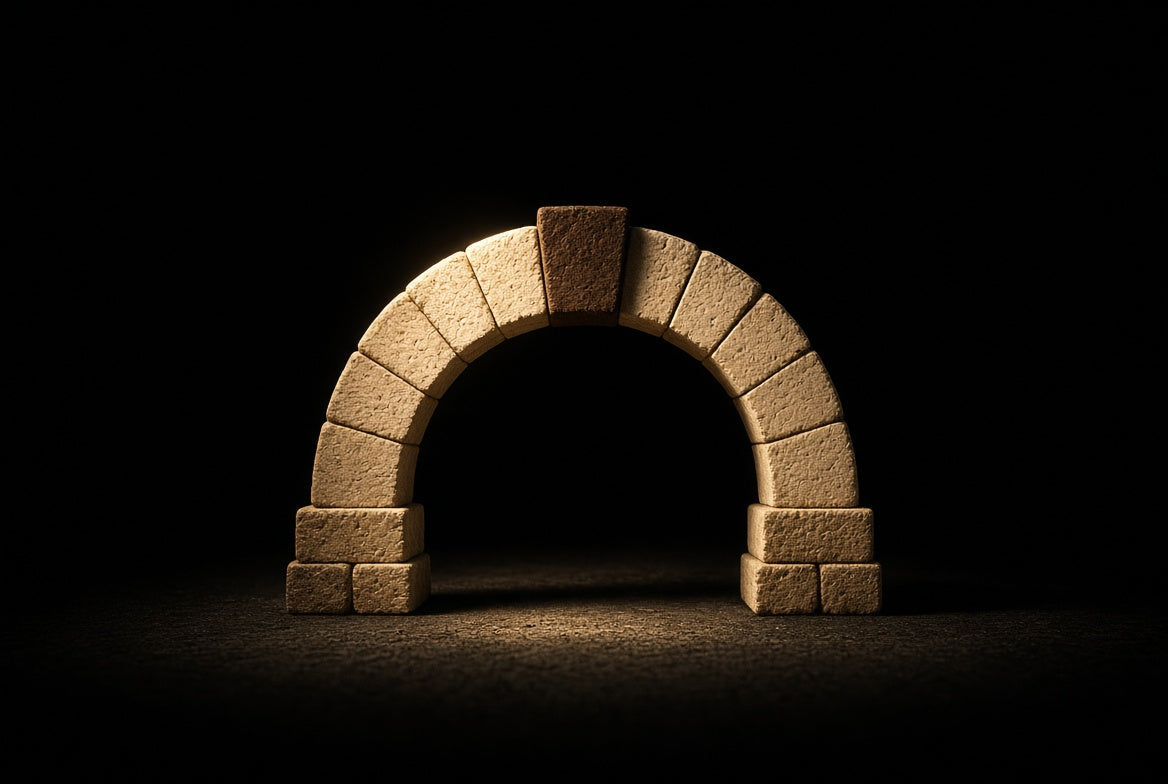
Organic Matter Isn't a Line Item. It's the Keystone.
Sand provides structure and drainage. That part of rootzone construction is well understood and rarely debated. What gets quietly minimized is the other half of the equation: organic matter's role in cation exchange capacity, water and nutrient holding, and carrying a functioning native microbiome into the rootzone in the first place.
When that component gets reduced to a token percentage — or skipped in favor of synthetic amendments layered on afterward — you're not simplifying the system. You're removing the one component that does multiple jobs at once, and replacing it with several isolated products that each do one job alone.
This Is the Debris Cycle, Playing Out in the Blend Itself
We've written before about the Debris Cycle — the industry pattern of selling isolated single-function patches instead of restoring the actual stable organic matter that would prevent the underlying instability in the first place. A rootzone blend that minimizes real organic matter and compensates with a stack of synthetic biostimulants later is the same pattern, just happening earlier in the process. You're not skipping a step. You're guaranteeing you'll need to buy the patch later.
What a Modest Inclusion Actually Buys You
This isn't an argument for a heavy organic matter percentage. It's an argument for treating it as a real, deliberate component rather than an afterthought. Even a modest, properly-sourced inclusion — stable, independently verified, carrying real biology rather than inert filler — gives a blend cation exchange capacity, water retention, and a functioning microbiome that sand alone simply can't provide, regardless of how many synthetic products get layered on top later.
The biology matters as much as the percentage. We've published the full independent microbiome data behind what a properly sourced organic matter component actually carries — not a marketing adjective, a lab report.
Quick Answers
Why is organic matter important in a rootzone blend, not just sand?
Sand provides structure and drainage, but organic matter provides cation exchange capacity, water and nutrient holding, and a functioning microbiome — functions sand alone cannot provide.
Can synthetic biostimulants replace organic matter in a blend?
Synthetic, isolated products typically address one function at a time. True organic matter provides several of these functions simultaneously as one integrated component, rather than requiring a stack of separate products.
Does more organic matter always mean a better blend?
Not necessarily — the goal is a deliberate, properly-sourced inclusion, not simply maximizing percentage. What matters is that the component included is stable, verified organic matter rather than an afterthought or filler.
More on this: The Debris Cycle, what actually drives root growth, and the complete independent microbiome data.