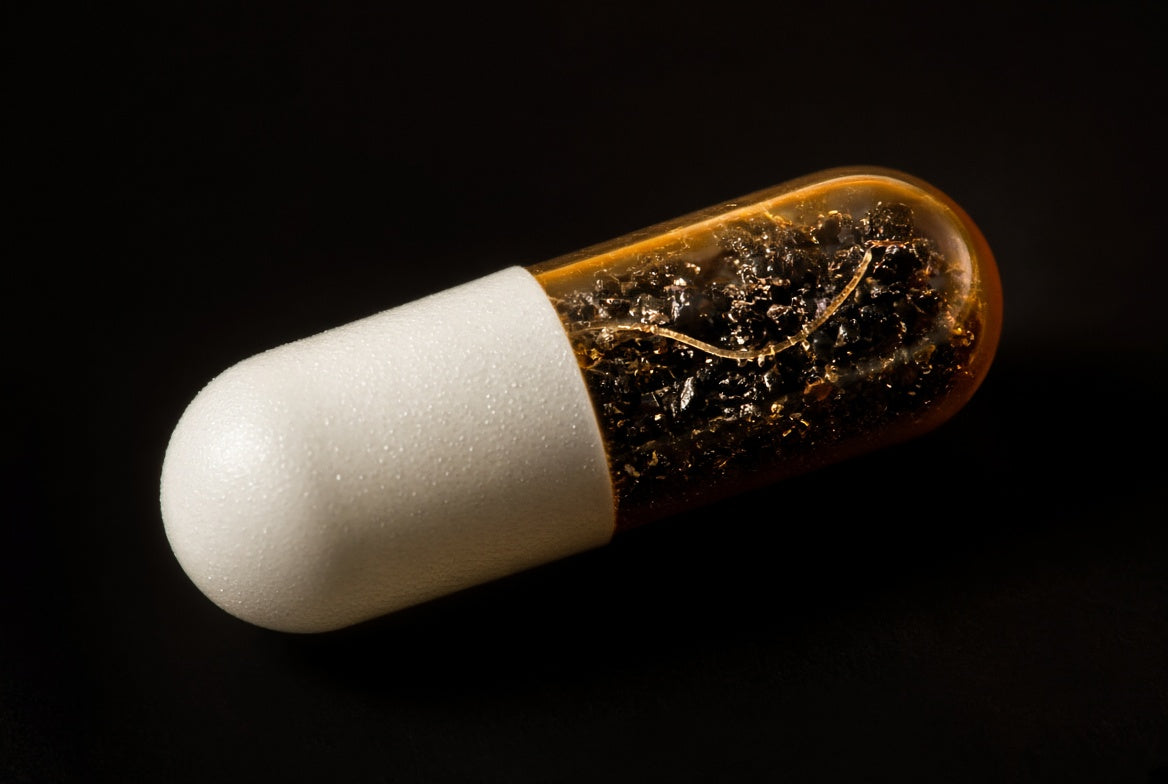
The Debris Cycle: Why Turf Care Never Runs Out of New Problems to Sell You
Scroll through any professional soil-improver catalog and you'll see the same story every time. A biostimulant for disease suppression. A different one for stress tolerance. A humic extract for cation exchange. A water-retention product because the last three didn't fix drainage either. Each one solves exactly one problem, in isolation, forever — because none of them were ever asked to solve the actual problem underneath.
Organic Matter vs. Organic Debris
Here's the distinction almost nobody in this industry says out loud: there's a real, defined difference between organic matter and organic debris. According to soil science standards, true organic matter is plant or animal residue that has fully decomposed into a stable form — humus. If it hasn't gotten there yet, it's something else. It's debris. And debris behaves completely differently in your rootzone than stable organic matter does.
Debris is still breaking down. That process pulls nitrogen out of your soil to fuel itself, shifts your soil structure as it goes, and makes moisture behavior less predictable — not immediately, but gradually, in ways that quietly compound over a season. (We've covered this exact nitrogen mechanism in more technical detail elsewhere.) True stable organic matter does the opposite. It doesn't compete for nutrients. It doesn't shift under you. It just holds — supporting microbial life and soil structure without ever needing anything back.
Why Everything Gets Marketed the Same Way
The problem is that almost everything gets marketed under the same "organic" and "natural" label regardless of which one it actually is. Compost gets sold as organic matter when it might still be actively decomposing debris. A product gets branded "just like nature" when it's really an isolated compound extracted or manufactured to mimic one narrow function nature used to provide for free. And when that instability shows up three months later as a new symptom, there's a new product waiting to sell you the patch.
The Same Playbook as Pharma
This isn't unique to turf. It's the same business model pharma runs on symptom management — treat the flare-up forever, never touch what's causing it, because the cause isn't a recurring revenue stream. Turf care just runs the same playbook with better photography.
The uncomfortable part: none of this requires bad actors. A product built to fix one function, honestly, isn't lying about what it does. The dishonesty is in the framing — "restoring nature" when what's actually happening is patching a system that's still degrading underneath the patch. Real restoration is slower, less photogenic, and doesn't need a new product every quarter. That's exactly why it doesn't dominate the feed.
Where DAKOTA Actually Fits
This is the whole reason an ancient reed-sedge deposit is a different conversation entirely. It's not manufactured to mimic a function. It's not still deciding what it wants to become. It's been forming for thousands of years under anaerobic bog conditions, long before it ever reached your rootzone — which is a different starting point than anything assembled in a lab this year. Independent lab testing on the material we work with consistently shows carbon-to-nitrogen ratios in the 15:1–24:1 range — the kind of number that comes from something that's had millennia to settle, not something formulated last quarter to solve this month's symptom.
We're not selling you the next patch. We're not interested in being the fortieth product in a stack that was never going to add up to a healthy rootzone anyway. The fix was never "add more." It was always "add something that's already finished becoming what it is."
Stop buying debris. Start building soil.
Quick Answers
What's the difference between organic matter and organic debris?
True organic matter is fully decomposed, stable humus that supports soil biology and structure without needing anything back. Organic debris is still actively decomposing — pulling nitrogen from the soil to fuel its own breakdown and behaving unpredictably as it goes.
Why does organic debris compete with turf for nitrogen?
Soil microbes need nitrogen to decompose carbon-rich material. Anything still breaking down consumes available soil nitrogen to fuel that process — nitrogen that would otherwise be available to the plant.
Is DAKOTA Peat organic matter or organic debris?
Organic matter. Independent lab testing consistently shows a C:N ratio of 15:1–24:1, consistent with fully decomposed, stable humus formed over thousands of years — not a recently-manufactured or still-decomposing material.
Why do so many turf products only address one symptom at a time?
Isolating a single function — disease suppression, water retention, one nutrient — into its own product creates an ongoing need for more products, rather than resolving the underlying instability causing multiple symptoms in the first place.
More on the material behind this: reed-sedge peat vs. sphagnum, what actually drives root growth, and the ideal C:N ratio for topdressing.